


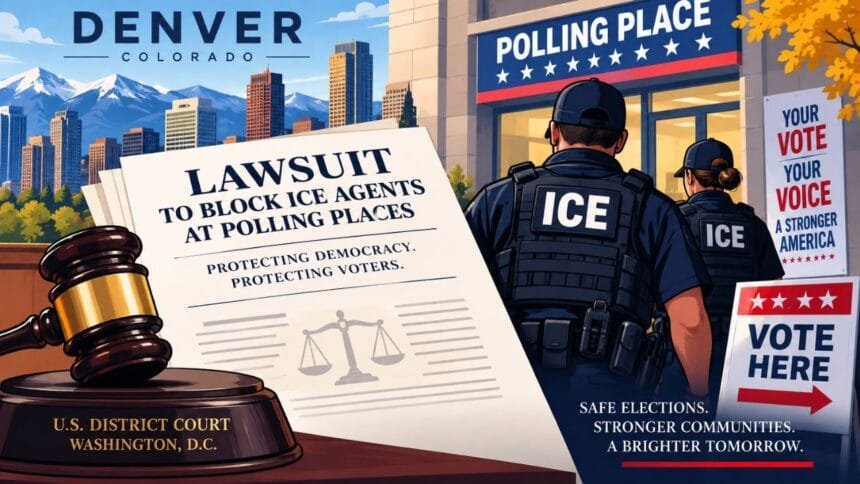
Denver and a coalition of voting-rights organizations have sued the Trump administration in federal court, seeking to prevent armed Immigration and Customs Enforcement agents from conducting immigration enforcement at polling places during the 2026 midterm elections.
The lawsuit, filed Sept. 10 in the U.S. District Court for the District of Columbia, was brought by Denver, the League of United Latin American Citizens, Common Cause and UnidosUS.
The plaintiffs are asking the court to restrict armed federal agents from polling locations and nearby voting facilities.
Why Denver Filed the Lawsuit
The plaintiffs argue that allowing armed ICE officers at polling places could intimidate voters, disrupt election administration and interfere with access to the ballot.
Their complaint relies heavily on 18 U.S.C. § 592, a federal statute that prohibits federal officials from bringing or keeping “troops or armed men” at locations where elections are being held, except when necessary to repel armed enemies.
The Justice Department’s election-offense guidance also says federal prosecutors generally cannot send FBI agents or deputy U.S. marshals to polling places and specifically cites Section 592.
Also See: Federal Judge Dismisses Michigan Police Chase Lawsuit Over Teen’s 2023 Death
ICE Polling-Place Dispute
The lawsuit follows comments by Homeland Security Secretary Markwayne Mullin on Sept. 1. Mullin said ICE would not patrol polling places but could appear if there were a threat or if officers needed to execute a warrant.
DHS has separately said ICE is not planning operations targeting polling locations, while maintaining that targeted enforcement could occur if an active public-safety threat endangered a voting site.
The plaintiffs nevertheless point to reported incidents in San Antonio and Syracuse as evidence of the potential for immigration enforcement activity to reach election locations.
What Happens Next
The legal battle comes as early voting approaches in several states.
The central question is whether federal immigration enforcement involving armed agents can lawfully occur at or near active polling locations under the circumstances described by the administration.
The case, LULAC v. U.S. Department of Homeland Security, could become an important test of the limits on federal law-enforcement activity around voting sites before the Nov. 3 midterm elections.
The court’s next decisions on emergency relief and any response from the federal government will determine whether restrictions are imposed before voting accelerates.