


A Florida couple has won a jury verdict against Citizens Property Insurance Corporation after the insurer denied their claim for Hurricane Ian damage, in a case that could cost more than $400,000 when attorney fees are included.
The underlying insurance judgment was just over $45,000, according to the law firm representing homeowners Bryan Guerra and Meghan Fitzgerald.
The verdict was issued on October 8, 2026, in Broward County, Florida, following a dispute over roof damage that the couple attributed to Hurricane Ian.
The case highlights the financial consequences of contested property insurance claims and the importance of evidence when homeowners challenge an insurer’s decision.
According to the announcement from Bryson Harris Suciu DeMay, the jury found in favor of Guerra and Fitzgerald in their lawsuit against Citizens.
The firm’s announcement states that the judgment included the underlying claim and that attorney fees are expected to exceed $400,000 after extensive litigation and expert work.
Citizens Insurance Lawsuit: Key Facts
| Case detail | Information |
|---|---|
| Defendant | Citizens Property Insurance Corporation |
| Homeowners | Bryan Guerra and Meghan Fitzgerald |
| Original claim | $45,950.93 |
| Verdict date | October 8, 2026 |
| Court | 17th Judicial Circuit, Broward County, Florida |
| Case number | CACE-25-000605 |
| Lawsuit filed | January 2025 |
| Potential overall cost | More than $400,000, including expected attorney fees |
The potential overall cost is not the same as the damages awarded to the homeowners.
The law firm’s announcement says the judgment was just over $45,000 and that attorney fees are likely to exceed $400,000.
The final fee amount should not be treated as confirmed unless established in subsequent court records.
Why Citizens Denied the Hurricane Ian Insurance Claim
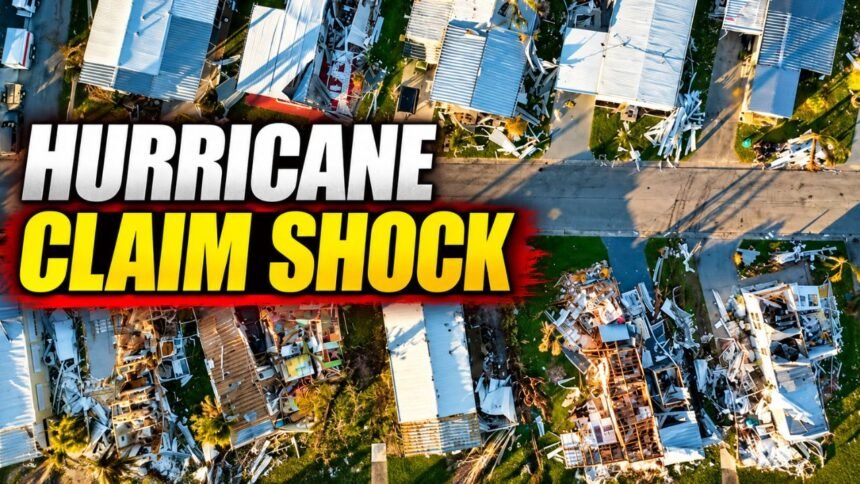
Hurricane Ian made landfall in Florida on September 28, 2022, causing widespread property damage.
Guerra and Fitzgerald’s roof damage was reportedly not immediately apparent.
The couple later discovered water intrusion and pursued an insurance claim.
Citizens denied the claim, arguing that notification came too late and that the roof damage resulted from wear and tear rather than a covered hurricane event.
The homeowners challenged that assessment.
Their legal team argued that the roof remained within its expected service life and that expert evidence connected the damage to Hurricane Ian.
Late-notice disputes can be particularly complicated when storm damage develops gradually or becomes visible months after a weather event.
Insurers may question whether the reported damage occurred during the policy period, whether it resulted from a covered peril, and whether delayed notification affected their ability to investigate.
In this case, the jury ultimately found that the property sustained direct damage during the relevant policy period, rejecting the insurer’s position on the disputed claim.
Also See: Connecticut Woman, 21, Dies After Ankle Injury as Lawsuit Raises Questions About Hospital Care
Jury Verdict Overturns Citizens Insurance Claim Denial
Guerra and Fitzgerald filed a breach-of-contract lawsuit in January 2025. Attorneys Patrick Montoya and Markus Kamberger represented the homeowners as the dispute progressed toward trial.
According to the firm’s announcement, the case required substantial legal work, expert testimony, evidence concerning wind patterns, and repair estimates.
The late-notice issue also presented a challenge because the insurer argued that the delay affected its ability to assess the loss.
The October 8 verdict marked a victory for the homeowners after approximately 21 months of litigation following the filing of the lawsuit.
Montoya described the case as a David-and-Goliath contest, arguing that homeowners can successfully challenge a large insurance company when their evidence supports their claim.
The decision concerns the facts and evidence presented in this particular case.
It does not automatically establish that other denied Citizens claims are valid or guarantee similar outcomes in future lawsuits.
Citizens Faces Broader Questions About Insurance Claim Handling
The verdict comes amid wider scrutiny of Florida’s property insurance market and Citizens’ handling of disputed claims.
Citizens describes itself as Florida’s insurer of last resort, providing property insurance to eligible consumers who cannot obtain coverage through the private market.
Its role has become especially important as Florida homeowners contend with elevated premiums, hurricane exposure, and changes in insurance availability.
A September 2025 investigation by ProPublica reported that Citizens prevailed in more than 90% of mandatory arbitration cases that reached final hearings and in approximately 55% of circuit-court trials over the preceding five years, based on the records analyzed in that investigation.
Those figures relate to particular dispute-resolution settings and time periods; they should not be interpreted as the percentage of all insurance claims Citizens denies.
The distinction between a formal denial and a claim closed without payment is also important.
Claims may receive no payment because damage falls below a deductible, is excluded from coverage, or does not meet policy requirements.
Nevertheless, a homeowner who receives no payment may still dispute whether the insurer correctly applied the policy.
Florida’s Office of Insurance Regulation publishes catastrophe-claim data, including claims closed with and without payment.
Its official catastrophe reporting resources provide additional context for understanding hurricane-related claims.
The financial pressure on homeowners is another concern.
An Insurance.com analysis of 2026 rates reported an average annual homeowners insurance premium of $8,471 in Florida for its specified coverage scenario.
Actual premiums vary by property, location, coverage, deductible, and insurer.
How Florida Homeowners Can Challenge an Insurance Claim Denial
The Guerra and Fitzgerald case offers practical lessons for homeowners dealing with hurricane-related property damage.
1. Document damage promptly. Photograph roof damage, ceiling stains, leaks, and affected belongings. Preserve dated images, repair invoices, and communications with contractors.
2. Report damage and retain records. Notify the insurer in accordance with the policy and applicable legal requirements. Keep copies of claim submissions, inspection reports, estimates, and denial letters.
3. Consider independent expertise. A qualified engineer, roofing specialist, or other appropriate professional may help assess whether damage is consistent with wind or another covered event. A public adjuster may also assist with claim documentation.
4. Review the policy and denial explanation. Examine exclusions, deductibles, notice requirements, appraisal provisions, and dispute-resolution clauses. Ask the insurer to identify the specific policy language supporting its decision.
5. Seek qualified legal advice. Florida property insurance deadlines and dispute procedures can depend on the loss date, policy terms, applicable statutes, and subsequent legal changes. A Florida insurance attorney can assess the available options and filing deadlines.
Homeowners should not assume that every denial is improper or that litigation will necessarily be financially worthwhile. Legal costs, expert fees, evidence, and the likelihood of recovery should all be considered.
Also See: Brazilian Man Gets 12 Years in Prison in $30 Million Money Laundering Scheme
Frequently Asked Questions
Why did Citizens Insurance deny the couple’s Hurricane Ian claim?
Citizens reportedly argued that the homeowners notified it too late and that the roof damage resulted from wear and tear rather than Hurricane Ian.
How much was the original Citizens Insurance claim?
The claim was valued at $45,950.93. The law firm’s announcement says the judgment was just over $45,000, with attorney fees expected to exceed $400,000.
When did the jury issue its verdict?
The Broward County jury issued its verdict on October 8, 2026, in case CACE-25-000605.
Can Florida homeowners challenge a denied hurricane insurance claim?
Depending on the circumstances, policyholders may challenge a denial through the insurer’s review process, applicable dispute-resolution procedures, or litigation. The appropriate option depends on the policy, evidence, and legal deadlines.
What evidence can help support a disputed hurricane claim?
Dated photographs, repair estimates, inspection records, expert assessments, policy documents, and correspondence with the insurer may help establish the damage and its possible cause.
What the Verdict Means for Florida Homeowners
The Guerra and Fitzgerald case demonstrates how a relatively modest property damage claim can develop into an expensive legal dispute when an insurer and policyholder disagree over the cause of damage and the timing of notification.
The homeowners secured a jury verdict after presenting evidence linking the roof damage to Hurricane Ian. However, the case also illustrates the time and expense that may accompany a successful challenge.
For Florida homeowners, the central lesson is to document damage carefully, understand policy requirements, and obtain qualified advice when an insurer disputes a claim.
An insurance denial is not necessarily the end of the process, but any challenge should be grounded in the policy language, credible evidence, and applicable law.