


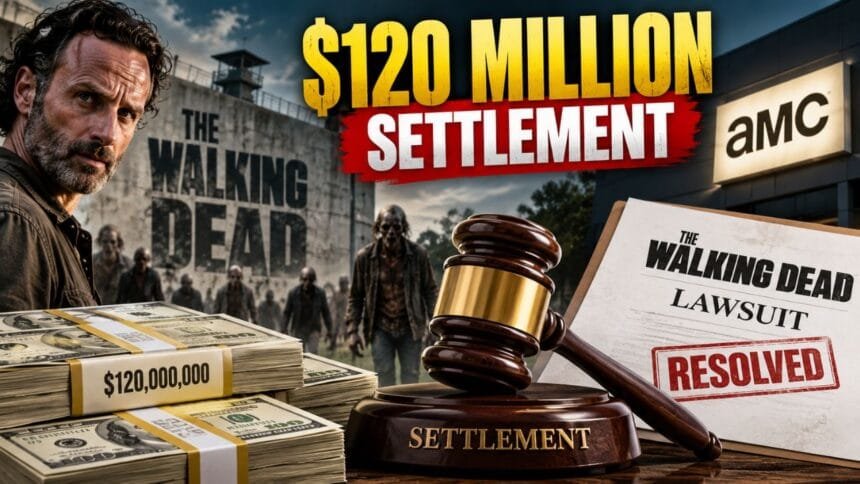
Kirkman, along with producers Gale Anne Hurd, David Alpert, Charles Eglee and Glen Mazzara, accused AMC of failing to properly honor contractual profit-participation obligations.
At the heart of the dispute was Modified Adjusted Gross Receipts (MAGR), the accounting formula used to determine how much certain participants in a television production receive from a project’s financial performance.
The lawsuit was filed in 2022, and AMC had been scheduled to face a federal trial on October 27, 2026.
The settlement agreement, signed September 4, resolves the breach-of-contract claims and provides for dismissal of the actions with prejudice.
How Much Will AMC Pay?
The $120 million settlement is divided into two payments:
| Payment | Amount | Deadline |
|---|---|---|
| Initial payment | $85 million | September 18, 2026 |
| Future-participation advance | $35 million | January 31, 2027 |
| Total | $120 million | — |
Importantly, the $35 million is not simply a separate payout. AMC says it will be treated as an advance against future MAGR participation connected to The Walking Dead and Fear the Walking Dead.
The plaintiffs will continue receiving ordinary-course participation, with the advance offset against those future amounts.
What Does the Settlement Mean for AMC?
The financial impact is significant. AMC said it expects to record an approximately $85 million charge in the quarter ending September 30, 2026.
The company also reduced its 2026 free-cash-flow outlook from approximately $220 million to $150 million, with the settlement payment contributing to the reduction.
AMC said its previously issued revenue and adjusted operating-income outlook remains unchanged.
Also See: Buc-ee’s Wins $850,000 Trademark Judgment Against Born United Over Beaver Logo
How Does the Frank Darabont Lawsuit Fit In?
The settlement is the latest chapter in a much larger legal saga surrounding The Walking Dead.
Former showrunner Frank Darabont and CAA previously pursued AMC over profit participation. That dispute ended in a reported $200 million settlement in 2021.
The later Kirkman-led litigation raised related contractual issues, including claims connected to provisions that could provide comparable treatment following the earlier settlement.
Why the Settlement Matters for The Walking Dead
Although the original The Walking Dead series ended its 11-season run in 2022, the franchise remains commercially important to AMC.
Its television universe has expanded through multiple spinoffs, while the company continues to monetize the property through licensing and streaming arrangements.
In July 2026, AMC and Netflix also announced a five-year, $500 million co-exclusive streaming agreement covering the Walking Dead universe, demonstrating the continuing financial value of the franchise.
Frequently Asked Questions
Is The Walking Dead lawsuit over?
The settlement resolves the claims covered by the agreement, with the related actions to be dismissed with prejudice.
Who receives the $120 million settlement?
The plaintiffs include Robert Kirkman, Gale Anne Hurd, David Alpert, Charles Eglee and Glen Mazzara, along with their associated production entities.
Why did AMC agree to pay $120 million?
The settlement resolves the plaintiffs’ breach-of-contract claims without the parties proceeding to the scheduled October trial.
What happens next?
The parties can move forward without the immediate uncertainty of the litigation, while the plaintiffs retain contractual participation rights in the franchise subject to the settlement’s terms.
Bottom Line
The $120 million agreement closes one of the most consequential profit-participation disputes in The Walking Dead‘s history.
For AMC, the deal removes the risk and cost of a looming trial, but it comes with a substantial near-term cash impact.
For Kirkman and the producers, the settlement provides compensation while preserving their ongoing contractual participation in the franchise.
The broader lesson is significant: The Walking Dead may have ended as an original television series, but its legal and financial value continues long after its finale.